
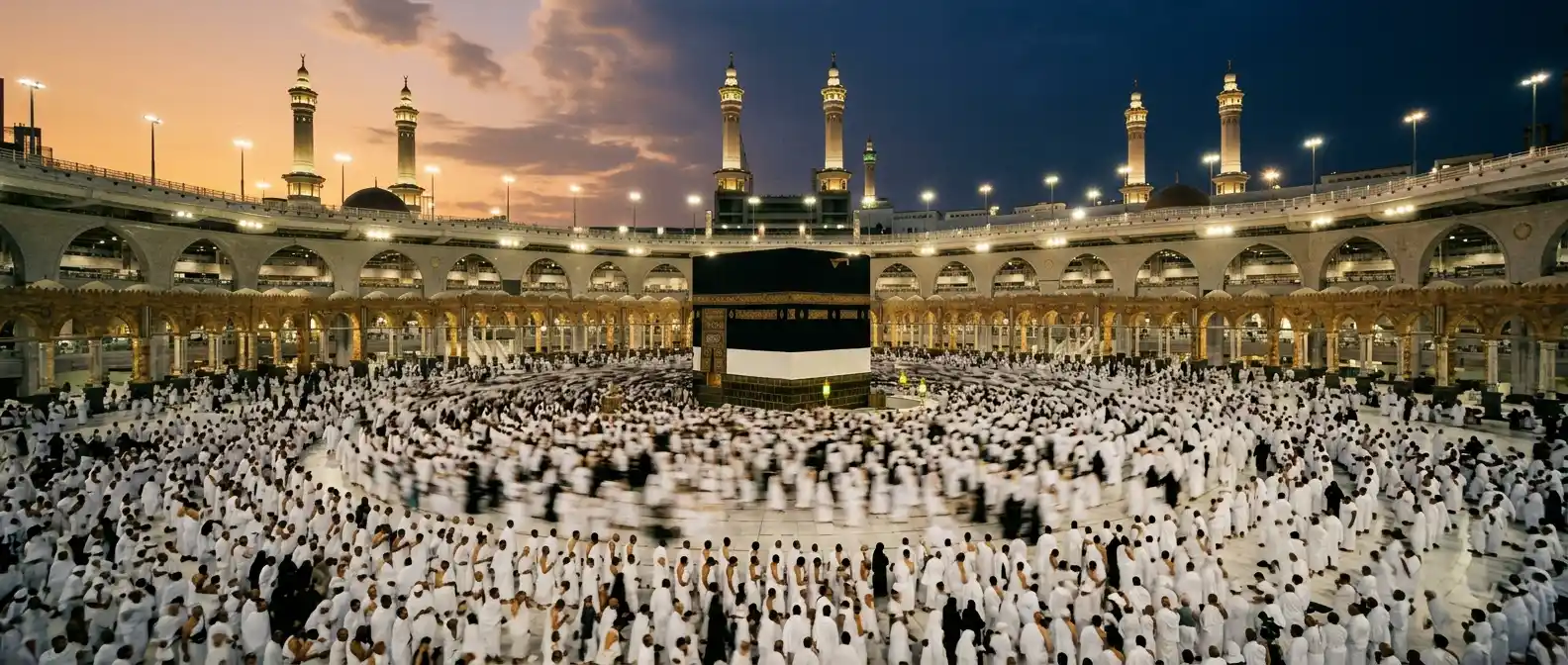
What Is Umrah?
Umrah is the "lesser pilgrimage" to the Sacred Mosque (Masjid al-Haram) in Makkah. Unlike Hajj, which has fixed days in the month of Dhul-Hijjah, Umrah can be performed at any time of the year. It is a beloved act of worship that wipes away sins and renews the heart.
This is a complete, step-by-step Umrah guide for first-timers and returning pilgrims alike. Every rite is shown in order — from entering ihram at the miqat, to tawaf around the Kaaba, sa’i between Safa and Marwah, and finally cutting the hair to exit ihram. Each step includes the authentic duas in Arabic, transliteration, and English, plus practical tips.
You can read the full guide below, and download the complete Umrah guide as a printable PDF booklet (with pictures) to carry with you on your journey.
Umrah at a Glance — The 4 Core Rites
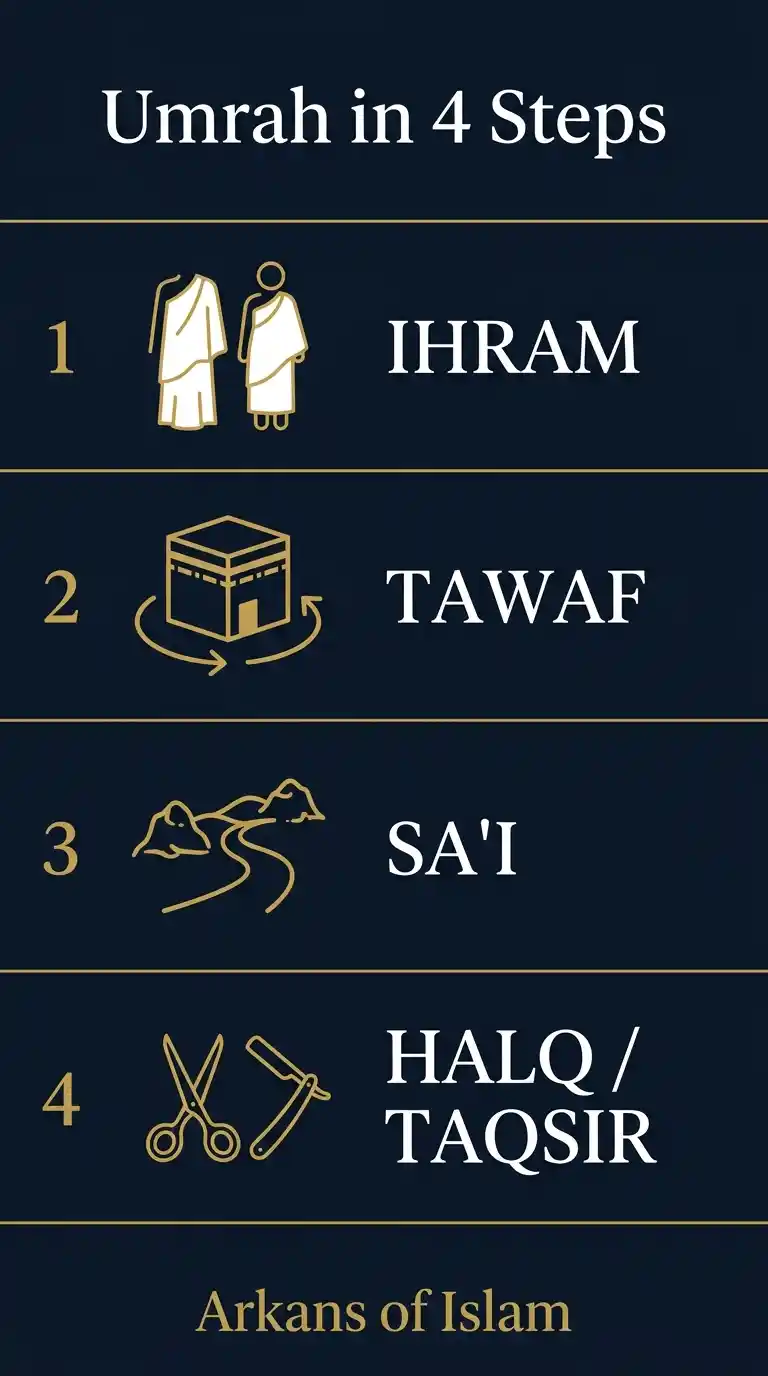
Umrah has four essential acts performed in order. Everything else supports these four:
1. Ihram
Enter the sacred state at the miqat with intention and talbiyah.
2. Tawaf
Circle the Kaaba seven times, beginning at the Black Stone.
3. Sa’i
Walk seven times between the hills of Safa and Marwah.
4. Halq / Taqsir
Shave or trim the hair to exit ihram — Umrah is complete.
How to Perform Umrah — The Full Rite in Order
Preparation Before Ihram
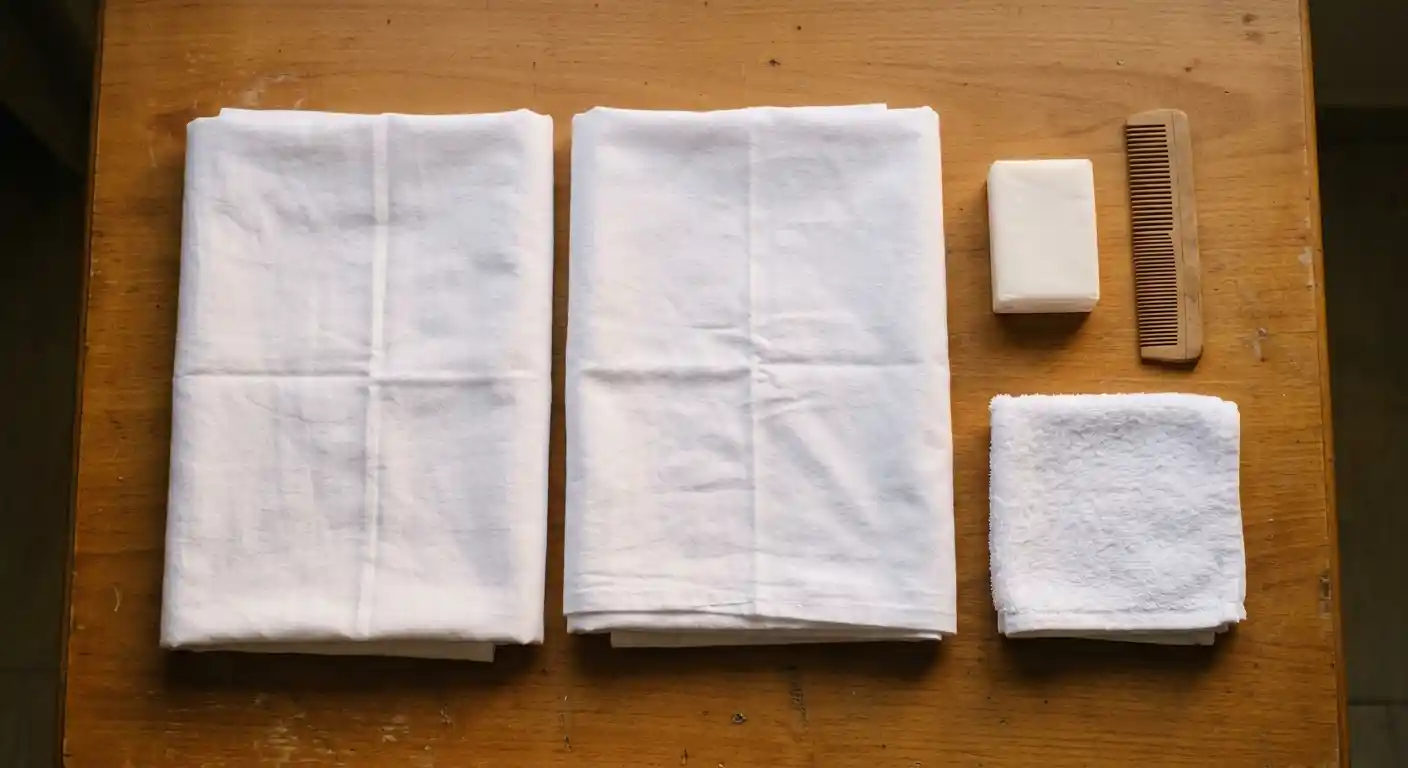
Before entering ihram, it is sunnah to prepare the body. Perform ghusl (a full ritual bath), trim the nails, remove underarm and pubic hair, and men may apply unscented oil to the hair. Men may apply perfume to the body (not the ihram cloth) before making the intention.
Men wear two clean, white, unstitched sheets: the izar (wrapped around the lower body) and the rida (draped over the upper body). Women have no specific ihram dress — they wear ordinary modest clothing that covers the body, and the face and hands are left uncovered during ihram.
Tip: Do all your grooming before ihram. Once in ihram you cannot cut hair or nails, use scented products, or wear stitched clothing (for men).
Enter Ihram at the Miqat & Make the Intention (Niyyah)
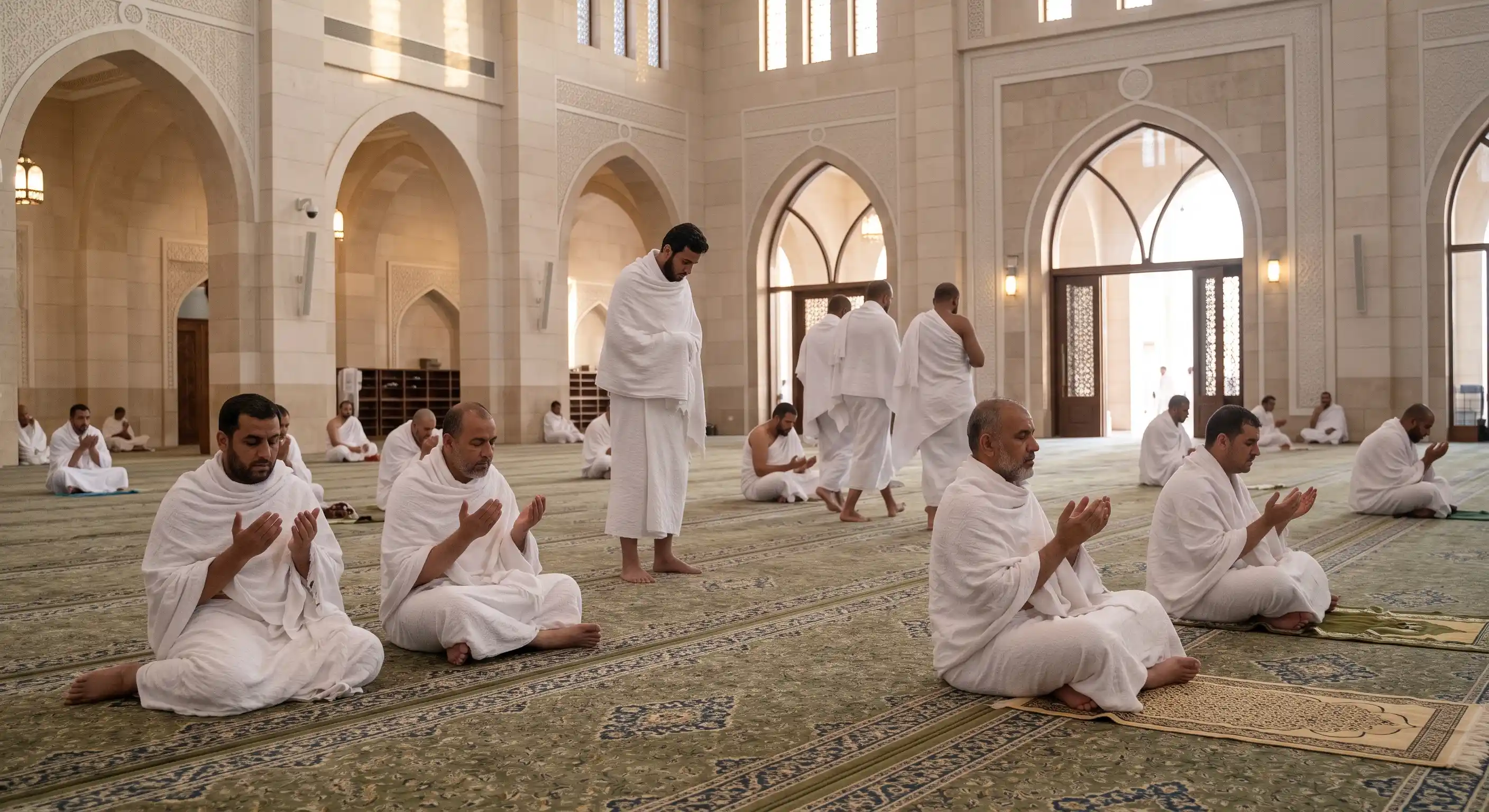
The miqat is the boundary station where pilgrims must enter ihram before proceeding to Makkah. If you fly into Jeddah or Madinah, your ihram station is set by your route (for example, those coming from Madinah use Dhul-Hulayfah / Abyar Ali). Many pilgrims enter ihram at the airport or on the plane before crossing the miqat.
After entering the state of ihram, make the intention for Umrah in your heart and say the words of niyyah aloud:
لَبَّيْكَ اللَّهُمَّ عُمْرَةً
Labbayka Allahumma ‘Umrah
Here I am, O Allah, for Umrah.
Tip: If you fear you may not be able to complete Umrah (illness, visa, etc.), you may add a condition: "If anything prevents me, my place is wherever You hold me back."
Recite the Talbiyah
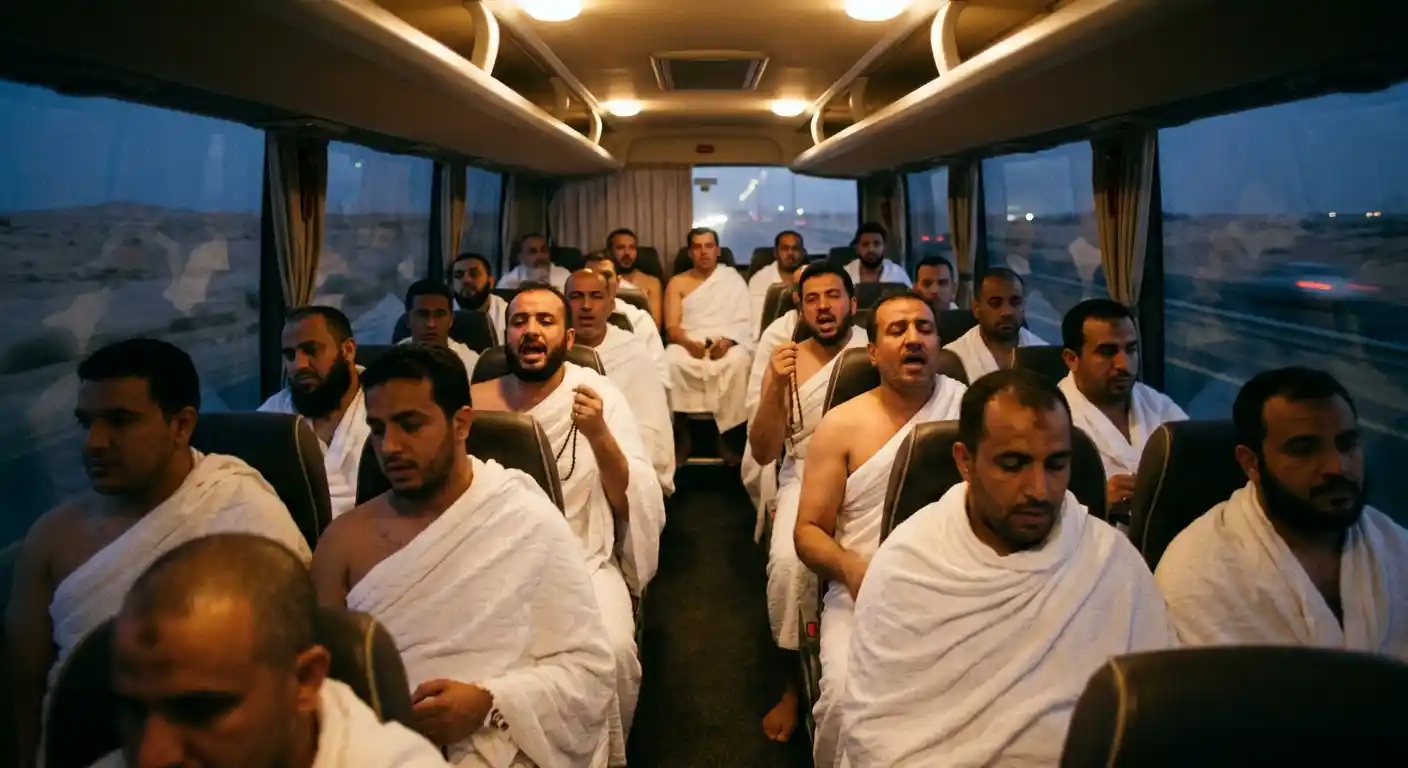
Immediately after the intention, begin reciting the Talbiyah. Men say it aloud; women say it softly. Continue repeating it often — on the coach, in the hotel, and all the way until you begin tawaf.
لَبَّيْكَ اللَّهُمَّ لَبَّيْك، لَبَّيْكَ لاَ شَرِيكَ لَكَ لَبَّيْك، إِنَّ الْحَمْدَ وَالنِّعْمَةَ لَكَ وَالْمُلْك، لاَ شَرِيكَ لَك
Labbayka Allahumma labbayk, labbayka la sharika laka labbayk, innal-hamda wan-ni’mata laka wal-mulk, la sharika lak.
Here I am, O Allah, here I am. Here I am, You have no partner, here I am. Surely all praise, grace, and dominion belong to You. You have no partner.
Enter Masjid al-Haram & See the Kaaba
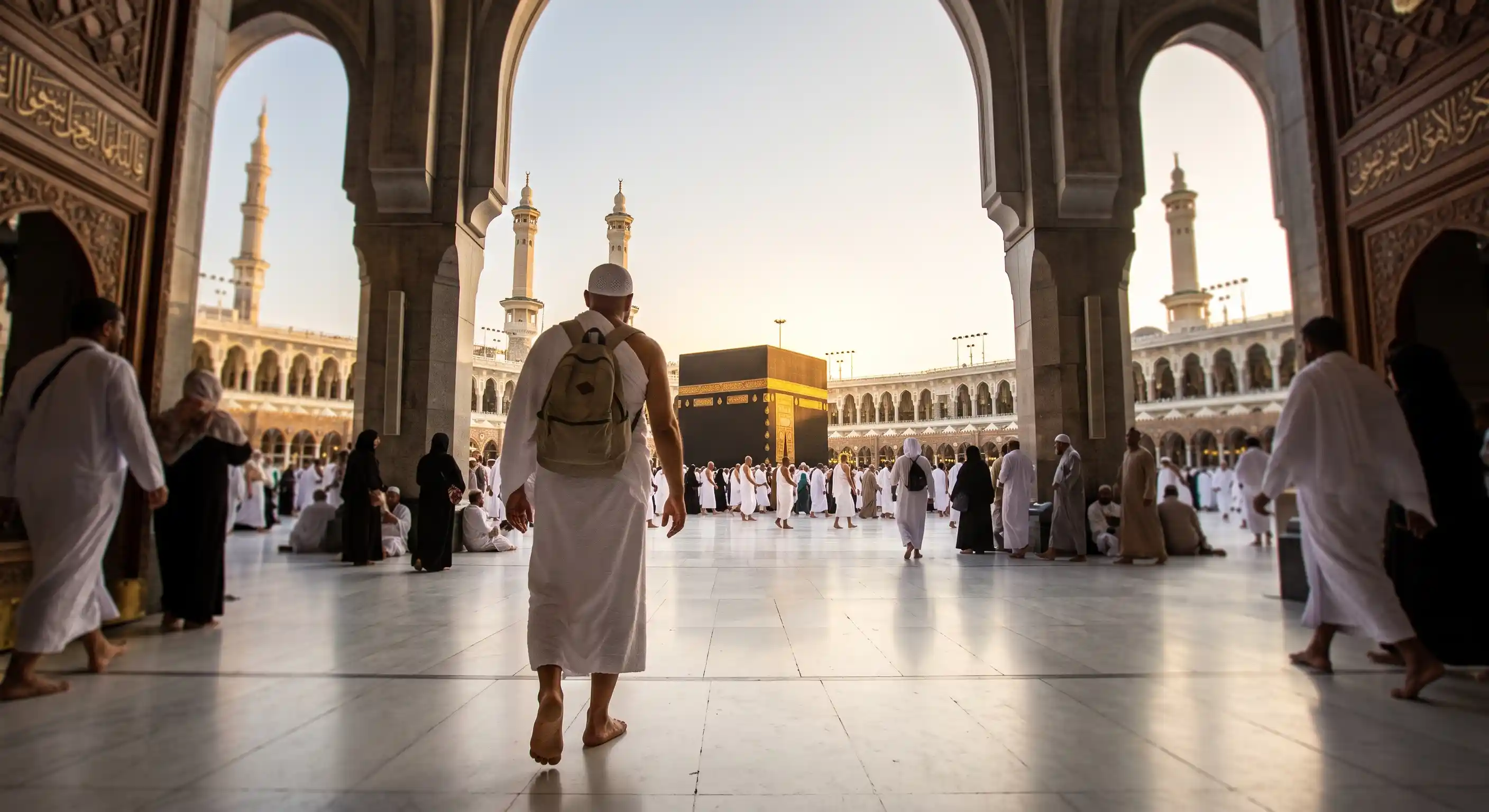
Enter the Sacred Mosque with your right foot first, reciting the dua for entering the masjid. When your eyes fall upon the Kaaba for the first time, it is a moment of great acceptance — raise your hands and make heartfelt dua for whatever you wish.
بِسْمِ اللَّهِ وَالصَّلاَةُ وَالسَّلاَمُ عَلَى رَسُولِ اللَّهِ، اللَّهُمَّ افْتَحْ لِي أَبْوَابَ رَحْمَتِك
Bismillah, was-salatu was-salamu ‘ala Rasulillah. Allahummaftah li abwaba rahmatik.
In the name of Allah, and prayers and peace be upon the Messenger of Allah. O Allah, open for me the gates of Your mercy.
Perform Tawaf Around the Kaaba (7 Times)
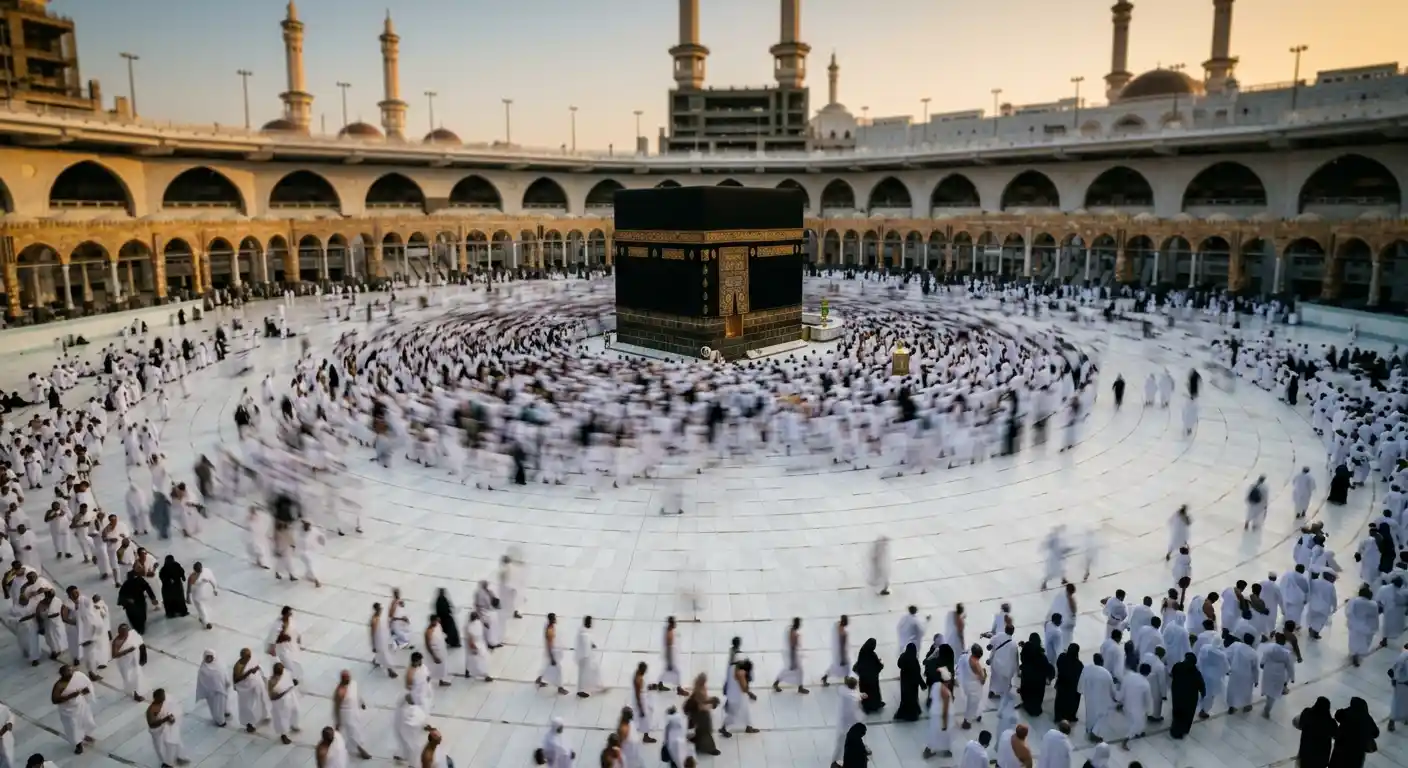
Tawaf is circling the Kaaba seven times in an anti-clockwise direction, keeping the Kaaba on your left. Begin and end each circuit at the Black Stone (Hajar al-Aswad).
Start by facing the Black Stone. Point toward it or touch/kiss it if easily possible (do not push or harm others), and say "Bismillah, Allahu Akbar." This gesture is called istilam. Men uncover the right shoulder (idtiba’) for the whole tawaf, and walk briskly (raml) in the first three circuits only.
There is no fixed dua for each circuit — you may make any dua, recite Quran, or send salawat. As you pass between the Yemeni Corner and the Black Stone, it is sunnah to recite the well-known verse:
رَبَّنَا آتِنَا فِي الدُّنْيَا حَسَنَةً وَفِي الآخِرَةِ حَسَنَةً وَقِنَا عَذَابَ النَّار
Rabbana atina fid-dunya hasanah, wa fil-akhirati hasanah, wa qina ‘adhaban-nar.
Our Lord, give us good in this world and good in the Hereafter, and protect us from the punishment of the Fire.
Tip: Lost count? Always assume the lower number and complete the circuit. Wudu is required for tawaf, as it is like prayer.
Pray Two Rakat at Maqam Ibrahim
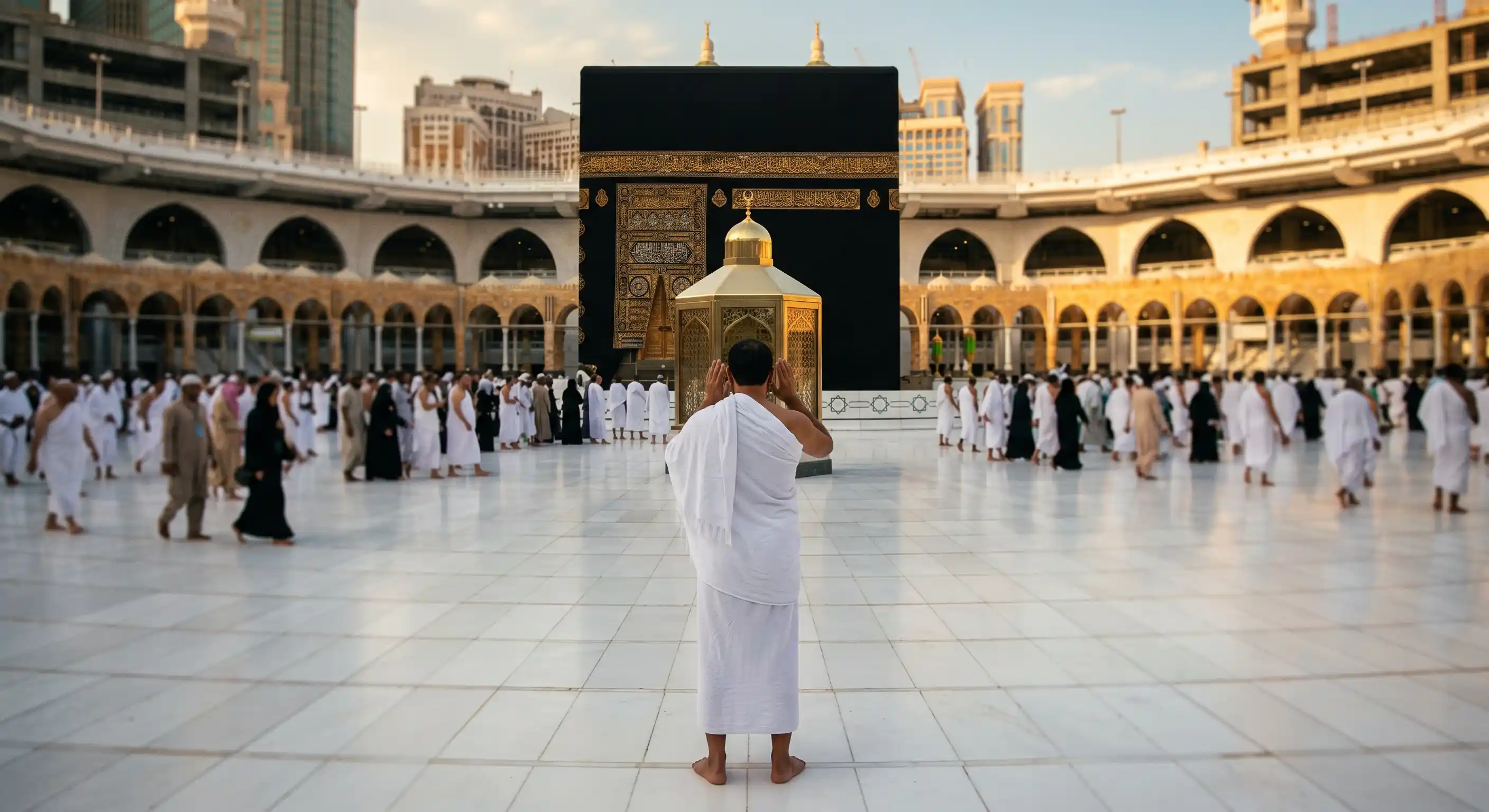
After completing the seventh circuit, cover both shoulders and go behind Maqam Ibrahim (the Station of Ibrahim) to pray two short rakat. If it is crowded, you may pray anywhere in the mosque.
It is sunnah to recite Surah al-Kafirun in the first rakat and Surah al-Ikhlas in the second. Then make dua.
Drink Zamzam Water
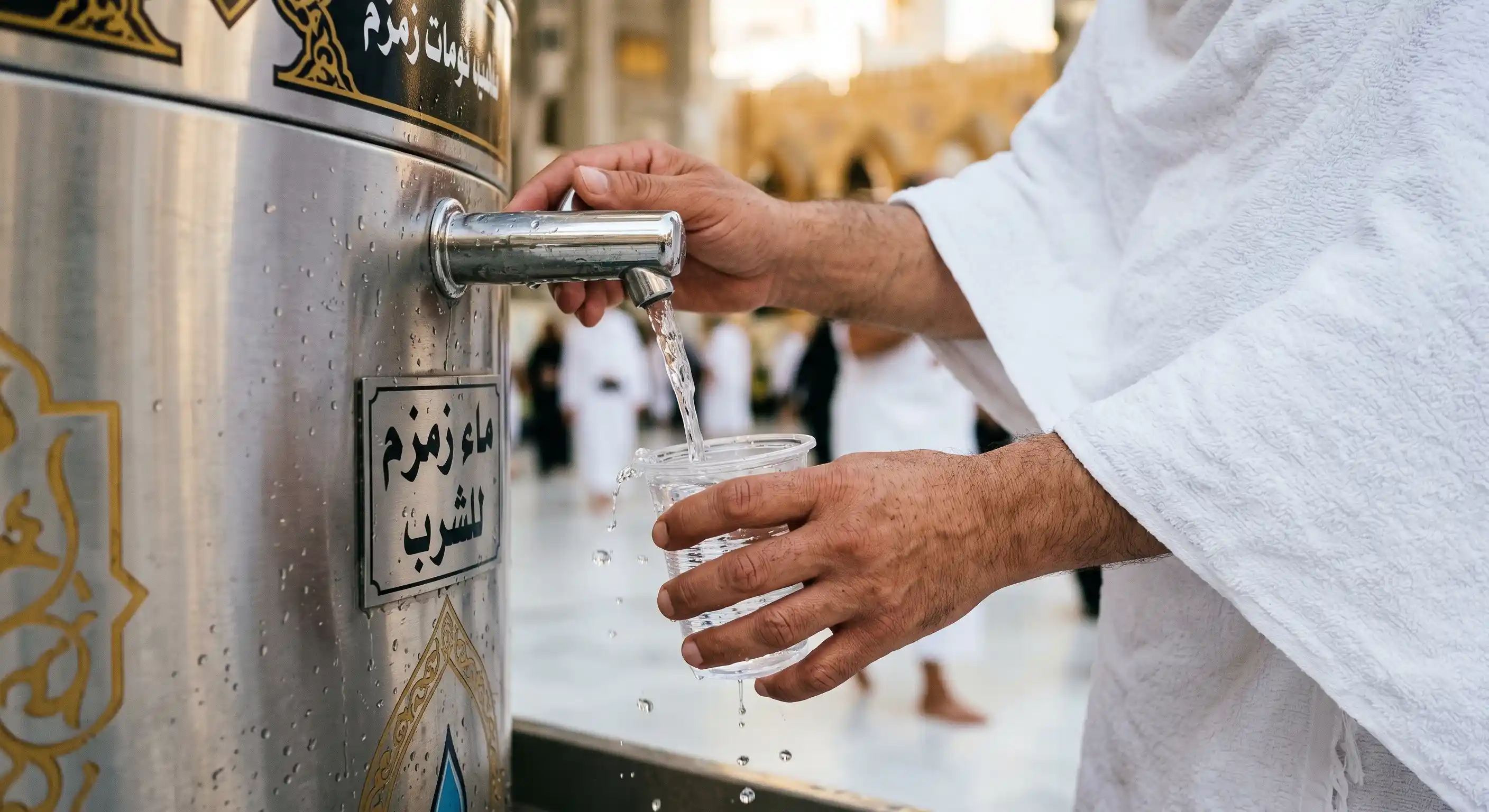
After the two rakat, go to the Zamzam dispensers and drink your fill of the blessed water. It is sunnah to drink while facing the Qiblah, in three breaths, and to make dua — for Zamzam is "for whatever it is drunk for."
Perform Sa’i Between Safa and Marwah (7 Times)
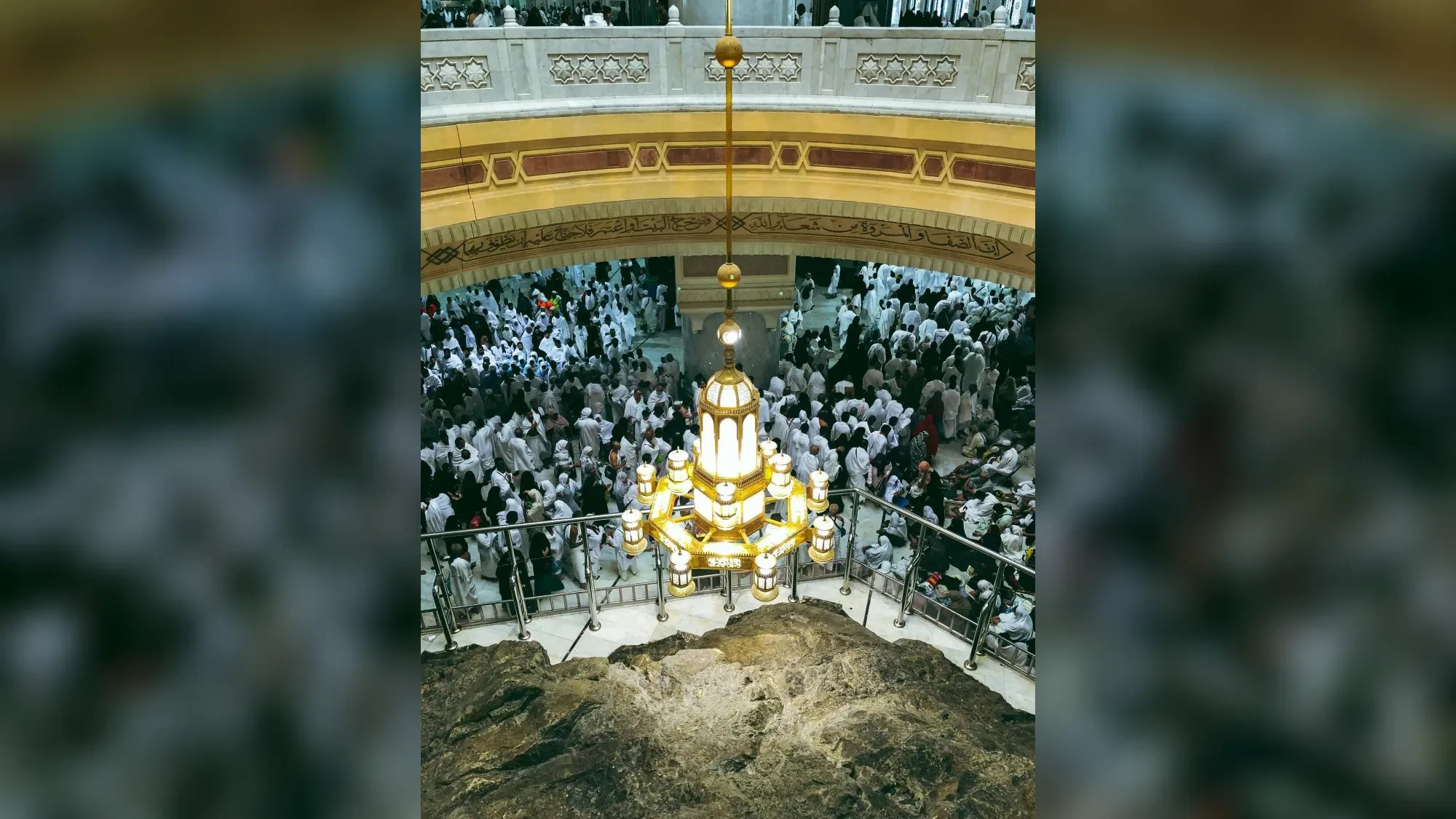
Proceed to the Mas’a (the walkway between Safa and Marwah). Sa’i commemorates Hajar’s search for water for her son Isma’il. It is seven trips: Safa to Marwah is one, Marwah to Safa is two, and so on, ending at Marwah on the seventh.
As you approach Safa for the first time, recite the verse below, then climb Safa, face the Kaaba, raise your hands, and make dua. Men jog between the two green marker lights; women walk normally throughout.
إِنَّ الصَّفَا وَالْمَرْوَةَ مِنْ شَعَائِرِ اللَّه
Innas-Safa wal-Marwata min sha’a’irillah.
Indeed, Safa and Marwah are among the symbols of Allah.
Tip: Wudu is recommended but not required for sa’i. There is no fixed dua for each trip — make any dua you wish.
Shave or Trim the Hair (Halq / Taqsir)
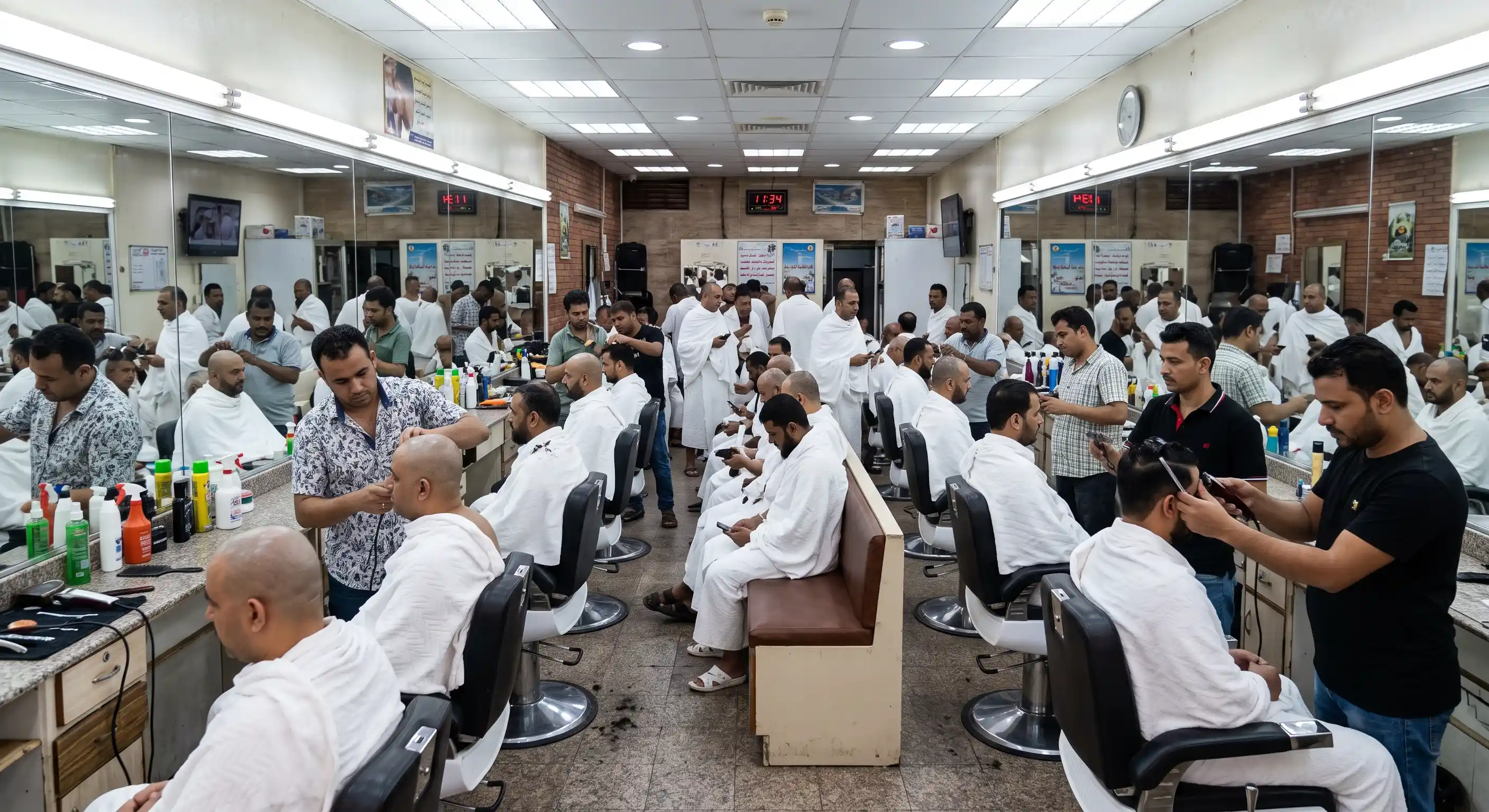
The final rite is cutting the hair. Men either shave the whole head (halq — greater reward) or trim it evenly all over (taqsir). Women cut a fingertip’s length (about 2.5 cm) from the ends of their hair — women do not shave.
With this, you exit the state of ihram and all its restrictions are lifted. Your Umrah is now complete — may Allah accept it.
Tip: Use a licensed barber or your own clippers. Men, shaving the full head brings greater reward, as the Prophet ﷺ supplicated three times for those who shave.
Essential Duas for Umrah
These are the key supplications you will use during Umrah, in order. You can also download them in the printable PDF booklet below.
| Moment | Transliteration | Meaning |
|---|---|---|
| Intention (Niyyah) | Labbayka Allahumma ‘Umrah | Here I am, O Allah, for Umrah. |
| Talbiyah | Labbayka Allahumma labbayk… | Here I am, O Allah, here I am… |
| Entering the mosque | Allahummaftah li abwaba rahmatik | O Allah, open for me the gates of Your mercy. |
| At the Black Stone | Bismillah, Allahu Akbar | In the name of Allah; Allah is the Greatest. |
| During tawaf | Rabbana atina fid-dunya hasanah… | Our Lord, give us good in this world… |
| Starting sa’i | Innas-Safa wal-Marwata min sha’a’irillah | Indeed, Safa and Marwah are among the symbols of Allah. |
Umrah for Ladies — What Is Different
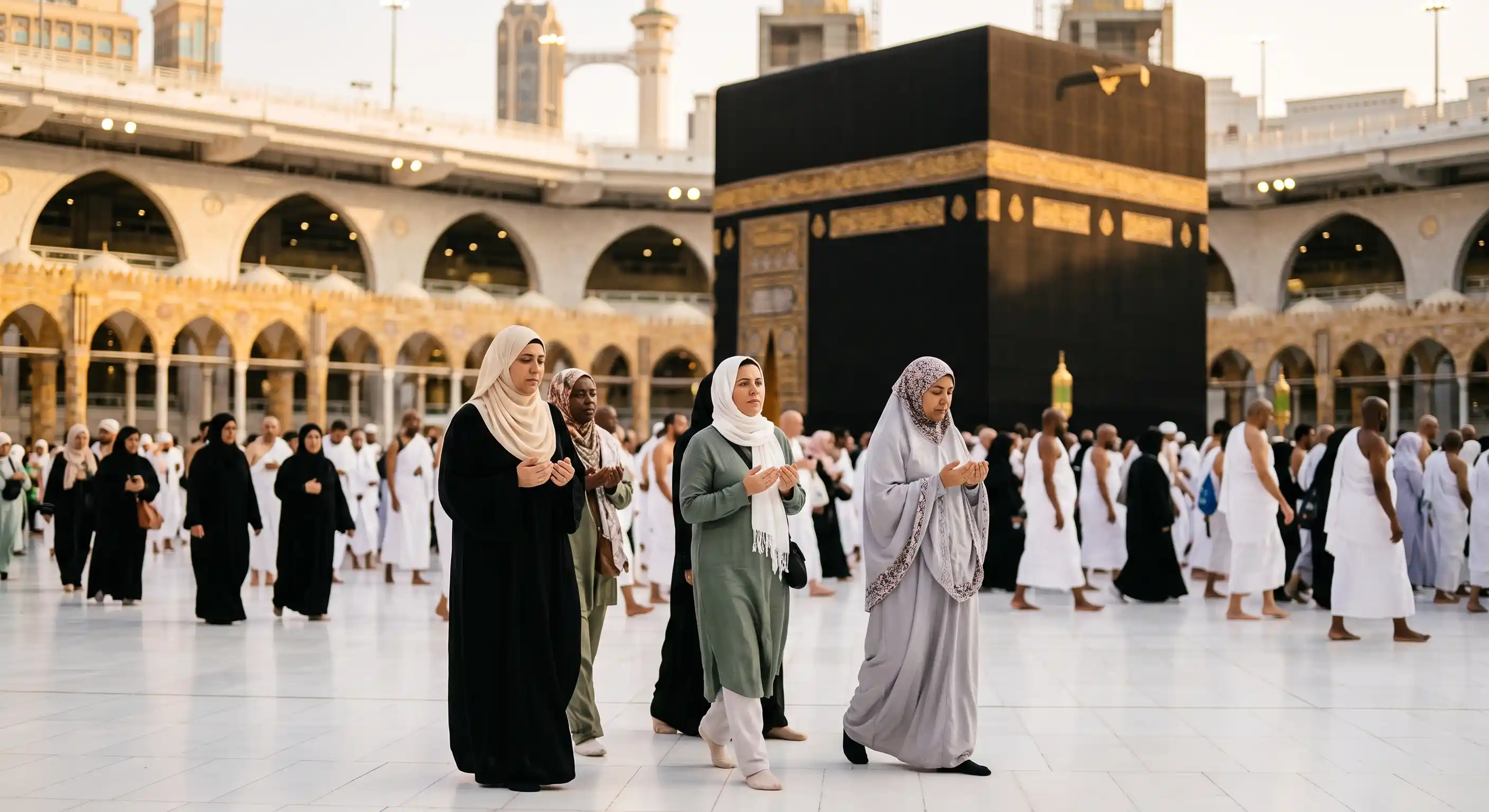
What do women wear for ihram?
There is no special ihram dress for women. Wear ordinary modest, loose clothing that covers the body. The face and hands are normally left uncovered during ihram, though a woman may cover her face from non-mahram men without letting the cloth touch her face where possible.
Do women recite the Talbiyah aloud?
No. Women recite the Talbiyah softly, in a low voice, rather than raising the voice as men do.
Do women run during tawaf or sa’i?
No. Women do not do raml (brisk walking) in tawaf, and do not jog between the green lights in sa’i. They walk at a normal pace throughout.
What if a woman is on her period (menstruating)?
A menstruating woman can enter ihram and do everything except tawaf, because tawaf requires purity. She waits until her period ends, performs ghusl, then completes the tawaf and sa’i. She should delay cutting the hair until after tawaf and sa’i.
How do women cut their hair?
Women gather their hair and trim a fingertip’s length (about 2.5 cm) from the ends. Women never shave the head.
Umrah Packing Checklist
Pack light but complete. Here are the essentials for a smooth Umrah:
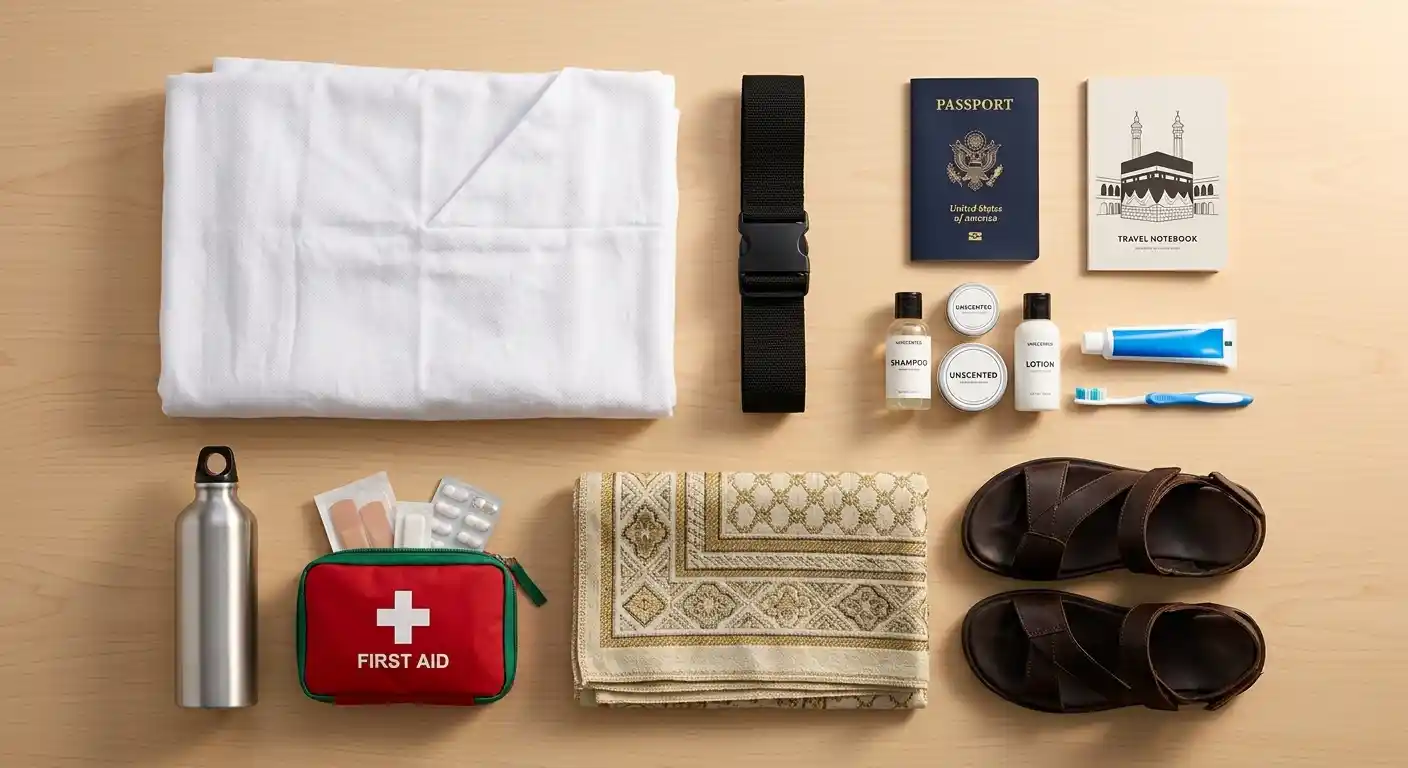
Documents & Money
- Passport & visa
- Vaccination certificate
- Printed hotel & flight bookings
- Some local currency (SAR)
- Bank card that works abroad
Ihram & Clothing
- Two ihram sheets (men) + spare
- Ihram belt with pockets
- Modest everyday clothing
- Comfortable sandals (easy to remove)
- Small bag for shoes in the Haram
Health & Comfort
- Unscented soap & toiletries
- Any personal medication
- Foldable prayer mat
- Refillable water bottle
- Blister plasters & a small first-aid kit
Common Mistakes to Avoid
- Crossing the miqat without entering ihram — you must be in ihram before you pass it.
- Using scented soap, deodorant, or perfume while in ihram.
- Starting tawaf without wudu (tawaf requires purity like prayer).
- Pushing and harming others to kiss the Black Stone — pointing to it is sufficient.
- Miscounting the circuits of tawaf or sa’i — count carefully on your fingers.
- Men covering the head, or wearing stitched clothing, while in ihram.
Download the Umrah Guide PDF
Take the whole guide with you. The printable booklet includes every step, the pictures, and all the duas in Arabic with transliteration and English — ready to print on A4 or save to your phone.
Frequently Asked Questions
What is the correct order of Umrah step by step?
The order is: (1) enter ihram at the miqat and make the intention, (2) recite the Talbiyah, (3) perform tawaf around the Kaaba seven times, (4) pray two rakat at Maqam Ibrahim and drink Zamzam, (5) perform sa’i between Safa and Marwah seven times, and (6) shave or trim the hair to exit ihram. Umrah is then complete.
How long does Umrah take?
The rites themselves usually take between two and four hours, depending on how crowded the Haram is. Tawaf and sa’i are the longest parts. Many pilgrims complete Umrah in a single visit to the mosque.
Can I perform Umrah at any time of year?
Yes. Unlike Hajj, which is only performed on fixed days in Dhul-Hijjah, Umrah can be performed at any time of the year. It is especially rewarding in Ramadan.
What are the pillars (fard) of Umrah?
According to the majority of scholars, the essential pillars are ihram (the intention), tawaf, and sa’i. Cutting the hair and entering ihram from the miqat are obligations (wajib). Missing a pillar invalidates the Umrah; missing an obligation may require compensation (dam).
Do I need a mahram to perform Umrah as a woman?
Requirements vary by madhhab and by Saudi visa rules, which have changed over time. Many scholars require a mahram for travel; current regulations have at times allowed women to perform Umrah in organised groups. Check the latest visa rules and consult a scholar for your situation.
Is there a printable Umrah guide PDF with pictures?
Yes. You can download the complete step-by-step Umrah guide as a printable PDF booklet with pictures and all the duas using the download button on this page. It is designed to print or save to your phone so you can follow it during your journey.
Related Umrah Guides
Ihram Essentials — What to Wear and Avoid →
Makkah Visitor Guide — The Haram & Etiquette →
Madinah Visitor Guide — The Prophet’s Mosque →